
Are Body Rejuvenation Treatments Actually Effective?
Last Updated: November 2, 2026
Quick Summary
Body rejuvenation treatments can improve skin texture and firmness for some people, but results vary. They work best on mild to moderate concerns and do not reverse significant sagging, remove large amounts of fat, or replace surgery.
Radiofrequency devices heat deeper skin layers to encourage collagen production over several weeks.
Non-surgical tightening may help mild looseness, but substantial excess skin usually calls for a surgical consultation.
Ablative lasers involve about a week or more of recovery, while non-ablative lasers need more sessions with less downtime.
Compare total first-year cost, including sessions, device type, body area, and maintenance, rather than the per-session price.
Every treatment carries some risk, so a qualified professional should review your medical history before you begin.
Table of Contents
What Body Rejuvenation Covers and What It Cannot Do
Body rejuvenation is an umbrella term for non-surgical treatments that aim to improve how the skin on the body looks and feels. For a broader look at body-wellness treatments and how massage-based care supports the body, read our complete guide. Many people use it to describe efforts to tighten skin, smooth texture, and restore a firmer appearance. A common question is whether these treatments actually work.
The honest answer is that results vary. Body rejuvenation can improve skin texture and firmness for some people, but it does not reverse significant sagging, remove large amounts of fat, or replace surgery. Treatments generally work best on mild to moderate concerns, and expectations should reflect that.
Many providers offer these treatments, so the category is broad. Some methods target the surface of the skin, while others work deeper to stimulate collagen. The right choice depends on your skin, your goals, and your health history.
Radiofrequency Skin Tightening for Firmness
Radiofrequency (RF) devices heat the deeper layers of skin to encourage collagen production.
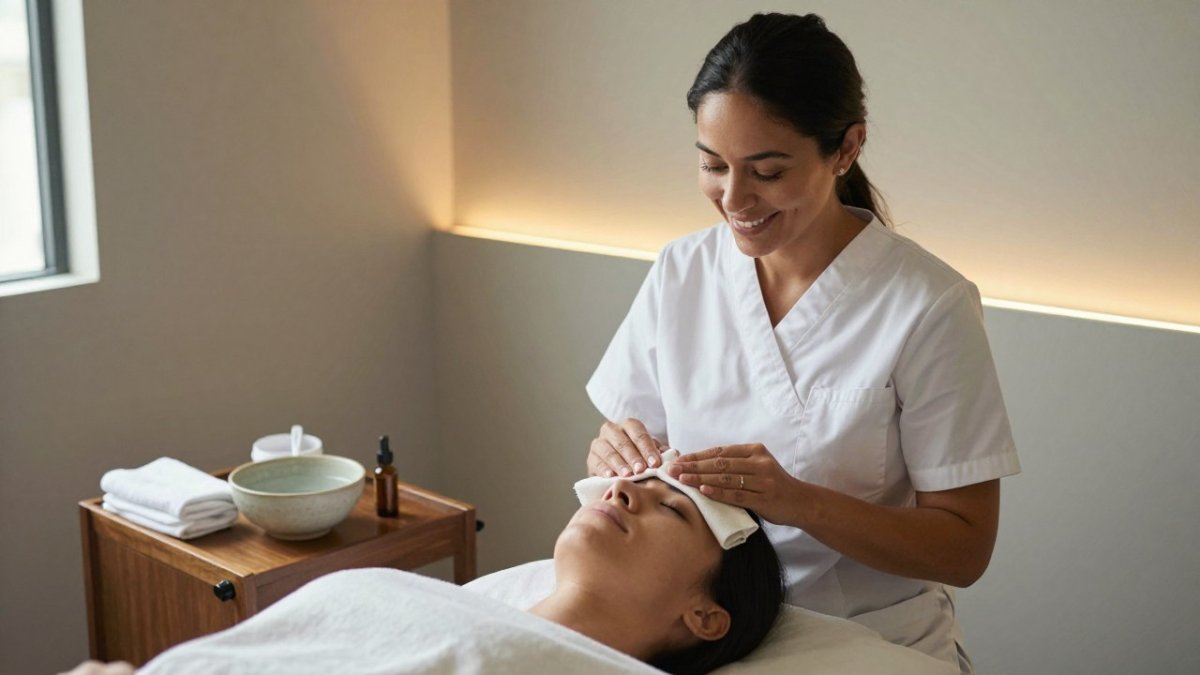
A calm treatment room where a licensed esthetician gently guides a handheld radiofrequency device over a client's upper arm, with soft lighting and neutral towels nearby. Esthetician using a radiofrequency device on a client's arm for body rejuvenation in a calm spa clinic
Firmness improvements from radiofrequency usually build gradually over several weeks as new collagen forms. Ask a qualified provider how many sessions are appropriate for your situation.
Treatments for Loose Skin After Weight Loss
Loose skin after significant weight loss is a common concern, and it is one of the harder problems for non-surgical care to solve. Skin that has been stretched for a long time may have lost much of its elasticity, which limits how much tightening a treatment can deliver.
Non-surgical options can help with mild looseness, particularly when the skin is still reasonably elastic. For substantial excess skin, many people ultimately discuss surgical options with a board-certified surgeon. Here is a practical way to think about it:
Mild looseness with good elasticity: non-surgical tightening may help
Moderate looseness: a combination of approaches may be discussed
Significant excess skin: a surgical consultation is usually the appropriate next step
If you are managing weight loss with medical support, it is worth coordinating your aesthetic plans with your prescribing clinician.
Body Skin Texture Treatments Compared
Texture concerns on the body are commonly addressed with resurfacing and collagen-stimulating treatments, which differ in how deep they work, how many sessions they require, and how much downtime they involve.
Chemical Peels and Exfoliation
Chemical peels apply an acid solution to remove the outer layers of dead skin and prompt a controlled exfoliation. Common ingredients include glycolic acid (an alpha-hydroxy acid that works on the skin surface), mandelic acid (a larger molecule that penetrates more slowly and is often better tolerated on sensitive skin), salicylic acid (a beta-hydroxy acid that is oil-soluble and useful on the back and chest), and trichloroacetic acid (TCA) for medium-depth peels.
Light peels: typically little to no downtime; a series of sessions is common to build results.
Medium peels: several days of redness and flaking are typical; results are more noticeable but so is the recovery.
Deep peels: reserved for specific concerns and require real recovery time; not a casual lunchtime option.
Peels are generally suited to surface texture and tone rather than tightening loose skin or addressing fat. Suitability depends on individual factors, so a professional review of your skin and medications matters.
Laser Resurfacing and Microneedling
Laser resurfacing uses focused light to remove damaged surface layers and trigger collagen remodeling. Ablative lasers (such as fractional CO2) remove tissue and involve meaningful downtime, often a week or more of redness and peeling. Non-ablative lasers and light devices work below the surface with less downtime but usually require more sessions.
Microneedling creates controlled micro-channels in the skin to stimulate the wound-healing response and collagen production. Radiofrequency microneedling adds heat at depth, which is why it is often grouped with tightening treatments rather than pure texture treatments. Downtime is typically a day or two of redness for standard microneedling.
A practical comparison:
Treatment | Primary mechanism | Typical session pattern | Typical downtime |
Light chemical peel | Surface exfoliation | Series of sessions | None to minimal |
Medium peel | Controlled deeper exfoliation | Fewer sessions | Several days |
Non-ablative laser | Dermal heating without surface removal | Series of sessions | Minimal to a few days |
Ablative fractional laser | Surface removal plus collagen remodeling | One to a few sessions | About a week or more |
Microneedling | Collagen stimulation via micro-injury | Series of sessions | One to two days |
RF microneedling | Collagen stimulation plus heat at depth | Series of sessions | A few days |
Pro Tip Ask your provider which device and settings they plan to use, not just the category name. "Laser" and "microneedling" cover a wide range of devices with very different depth, downtime, and price.
Skin type and tone matter for these procedures. If you are comparing options, ask each provider about the device, the number of sessions, and the recovery to expect.
Realistic Results, Session Counts, and Total Cost
Many body rejuvenation treatments are delivered as a series rather than a single visit, so comparing total commitment (sessions, spacing, maintenance, and expected duration of results) is useful. You can review current offers and pricing before committing to a plan.
What the evidence actually supports
It helps to separate treatments with a reasonable body of clinical support from those that lean mostly on marketing:
Improvement from these treatments is typically gradual and is best judged against your own baseline.
Session counts and maintenance
Exact protocols vary by device and provider. Ask your provider for the protocol they recommend.
Results are not permanent, because natural aging continues alongside collagen remodeling.
What drives total cost
The full commitment is rarely the price of one session. Cost drivers include:
Number of sessions in the initial series.
Device and technology, ablative lasers and RF microneedling generally cost more per session than light peels or standard microneedling.
Body area and size, treating the abdomen or thighs takes longer than treating the face or neck.
Provider type and setting, a board-certified dermatologist or plastic surgeon typically charges more than a spa setting, and the difference is often in assessment and safety, not just the device.
Maintenance sessions per year to sustain results.
Key Takeaway Ask for a written plan that lists the number of sessions, the spacing, the per-session price, and the expected maintenance cadence. Compare plans on total first-year cost, not on the advertised per-session price.
Pricing depends on the treatment, area, and provider. Contact Rekindle Massage & Skin Spa directly for current prices and a quote.
Risks, Contraindications, and Recovery Time
Every treatment carries some risk, and the right choice depends on your health. Common effects include redness, swelling, tingling, or temporary sensitivity. More serious complications are less common but possible, especially with deeper procedures.
Certain conditions may make some treatments unsuitable, including active skin infections, certain medications, pregnancy, and some autoimmune or wound-healing conditions. Recovery time ranges from none to several days or more, depending on the treatment.
General information cannot replace a personal assessment. A qualified professional should review your medical history before any treatment. You can also consult a board-certified dermatologist if you have concerns about your skin.
Choosing a Provider and Booking Your Consultation at Rekindle
Choosing a provider matters as much as choosing a treatment. Look for clear answers about training, credentials, safety practices, and realistic outcomes. Ask who will perform your treatment and what qualifications they hold.
Rekindle Massage & Skin Spa can walk you through your goals at a consultation. To schedule a consultation, call or text 918 730 8649 for appointments and details.
Frequently Asked Questions
What are skin rejuvenation treatments?
Skin rejuvenation treatments are non-surgical procedures that aim to improve the appearance of skin by stimulating collagen, increasing cell turnover, or tightening tissue. Common options include chemical peels, microneedling, laser resurfacing, and radiofrequency. Results depend on skin type, the treatment used, and how many sessions are completed. A consultation with a qualified provider helps determine which approach fits your goals and whether it is appropriate for your skin.
How long does it take to see results from body skin tightening treatments?
Many people notice early changes within several weeks, but collagen remodeling continues for months after treatment. Radiofrequency and similar energy-based treatments usually require a series of sessions, often spaced several weeks apart. Individual timelines vary with age, the extent of looseness, and skin condition. Your provider can give a realistic estimate after reviewing your goals during a consultation.
Can treatments for loose skin after weight loss really help?
Non-surgical treatments can improve mild to moderate laxity and texture, but they generally cannot remove large amounts of excess skin. Loose skin after significant weight loss often responds best to a combination of approaches and realistic expectations. Severe laxity may require a surgical consultation with a board-certified plastic surgeon. A qualified provider can assess your skin and recommend appropriate options.
What should I ask before booking a body rejuvenation treatment?
Ask about the provider's training and credentials, which device or product will be used, expected sessions, typical downtime, and possible side effects. Ask what results are realistic for your skin. Confirm current pricing directly with the provider, since costs depend on the treatment, number of sessions, and area treated. Visit Rekindle's website or contact the spa for current prices and a consultation.

Comments