
9 Benefits of Professional Facial Treatments for Your Skin
Last Updated: October 30, 2026
Quick Summary
A professional facial is a treatment performed by an esthetician that cleanses, exfoliates, and hydrates the skin in one session. Its main benefits are deeper cleansing than most people can achieve at home, including clearing congestion and blackheads, plus smoother, brighter-looking skin.
A typical facial includes skin analysis, cleansing, exfoliation, extraction when needed, then a mask and hydration.
Facials most often clear congestion and blackheads that daily washing rarely removes from pores.
Most facials last 60 to 90 minutes.
Avoid squeezing blackheads at home between appointments, since it can push bacteria deeper and leave marks.
Bring a list of all products and prescriptions, including retinoids and acids, before your appointment.
Table of Contents
What a Professional Facial Does for Your Skin
A professional facial is a treatment performed by an esthetician that cleanses, exfoliates, and hydrates the skin in one session. Most people book one for the deep cleaning they can't reach at home. (Source: the American Academy of Dermatology)
Many people notice their skin looks brighter and feels smoother right after a facial. The effects are usually temporary, which is why regular visits matter more than a single treatment.
A typical facial follows a clear sequence:
Skin analysis: The esthetician checks your skin type, texture, and concerns.
Cleansing: Oil, dirt, and makeup residue come off before anything else happens.
Exfoliation: Dead skin cells are loosened so the skin looks more even.
Extraction: Congestion and blackheads are cleared when needed.
Mask and hydration: A targeted mask and serum finish the treatment.
Deep Cleansing and Unclogging Pores
Daily washing removes surface oil, but it rarely clears what builds up inside pores. A professional facial goes further.
Congestion forms when oil, dead skin, and debris block a pore. Over time, that buildup can show up as blackheads or small bumps.
Results vary by skin type, so ask your esthetician what to expect for yours.
Watch out: Avoid squeezing blackheads at home between appointments. It can push bacteria deeper and leave marks (the American Academy of Dermatology).
Exfoliation, Texture and Radiance
Dead skin cells can make the complexion look dull and rough. Exfoliation helps loosen them so fresh skin can show through.
Healthily
A provider can adjust the strength based on your skin. Gentle exfoliation suits sensitive skin, while oilier skin may handle a stronger option.
Types of Facials and Their Benefits
Not every facial does the same job, and the name on a menu tells you less than the steps and ingredients inside it. The list below maps common facial categories to the concerns they are typically built for, so you can walk into a consultation with a specific question instead of a vague request.
Hydrating facial: Built around humectants such as hyaluronic acid and glycerin, often finished with a barrier-supporting moisturizer. Best for skin that feels tight, looks flaky, or stings after washing. It adds water to the surface; it does not fix oil production or congestion.
Deep cleansing facial: Focuses on steam, gentle exfoliation, and extraction to clear congestion. Helpful for oily skin and visible blackheads.
Exfoliating facial: Uses acids such as glycolic, lactic, or salicylic acid, or physical exfoliation, to loosen dead surface cells. Designed for dullness and uneven texture. Strength matters more than the label, a 20% glycolic peel and a light lactic serum are both 'exfoliating facials' but behave very differently.
Anti-aging facial: Usually combines exfoliation, hydration, and sometimes peptides or antioxidants. It can temporarily plump and smooth the look of fine lines, but it does not replace in-office procedures such as lasers or neuromodulators, and results are cosmetic and short-lived.
Acne-focused facial: Aimed at congestion and breakouts, typically with gentler extractions and anti-inflammatory ingredients. If you have cystic acne or are on prescription retinoids, ask your dermatologist before booking.
Brightening facial: Targets the look of dark spots and uneven tone, often with vitamin C, niacinamide, or gentle acids.
How to Match a Facial to Your Skin
Use your main concern as the starting point, then let the esthetician adjust:
Dry or dehydrated skin: Start with hydrating and barrier-focused options; avoid strong acid peels until the barrier is stable.
Oily or congested skin: Deep cleansing and salicylic-acid-based exfoliation are common starting points.
Sensitive or reactive skin: Ask for gentle cleansing, short contact times, and no extractions on inflamed areas.
Dullness or uneven texture: Exfoliating facials, introduced at a low strength first.
**
Fine lines and firmness: Hydrating and antioxidant-focused facials, with realistic expectations about temporary effects.
Pro Tip Bring a list of every product and prescription you use, including retinoids, benzoyl peroxide, and acids. Contact time and strength should be adjusted around them, and hiding them can lead to a burn rather than a benefit.
A patch test or a shorter first session is a reasonable request if you have reacted badly to products before. Before choosing a treatment, a qualified esthetician should ask about your routine, medications, and recent treatments.
Professional Facial vs At-Home Facial
Both have a place in a skincare routine. They serve different purposes.
Factor | Professional Facial | At-Home Facial |
Depth of cleansing | Deeper, with extractions | Surface-level |
Products used | Professional-grade | Store-bought |
Skin analysis | Done by a trained esthetician | Self-assessed |
Frequency | Every few weeks to months | Daily or weekly |
Home care keeps skin steady between visits. A professional facial addresses concerns that daily products often miss.
What to Expect During a Facial
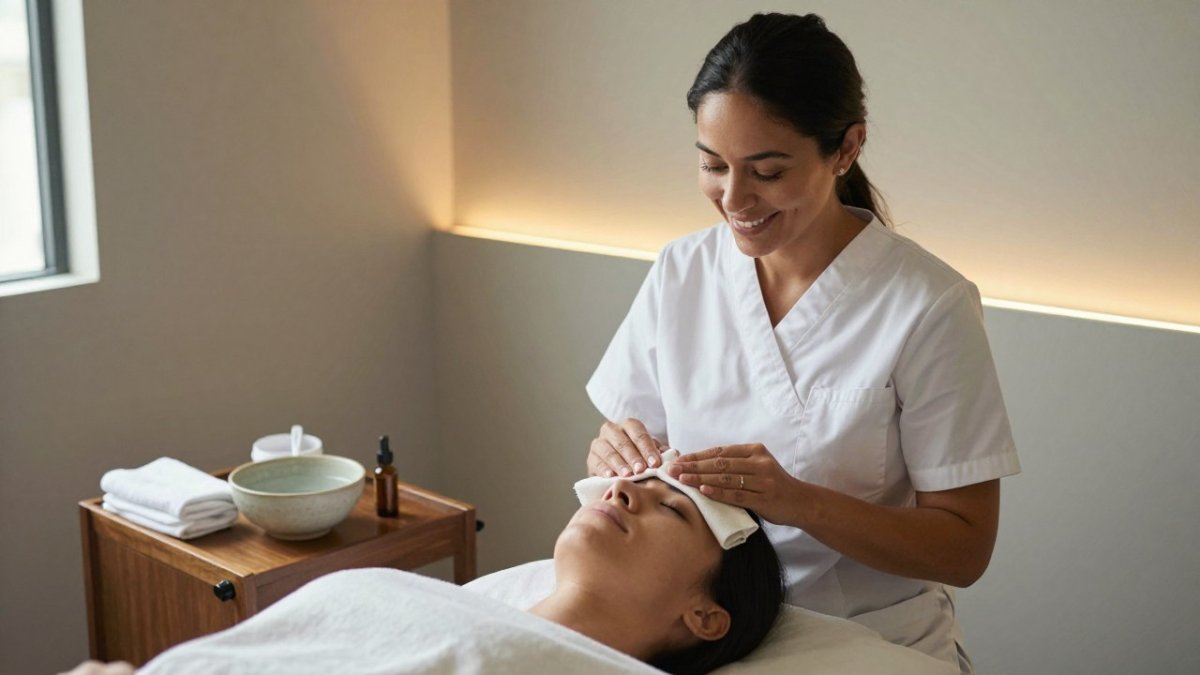
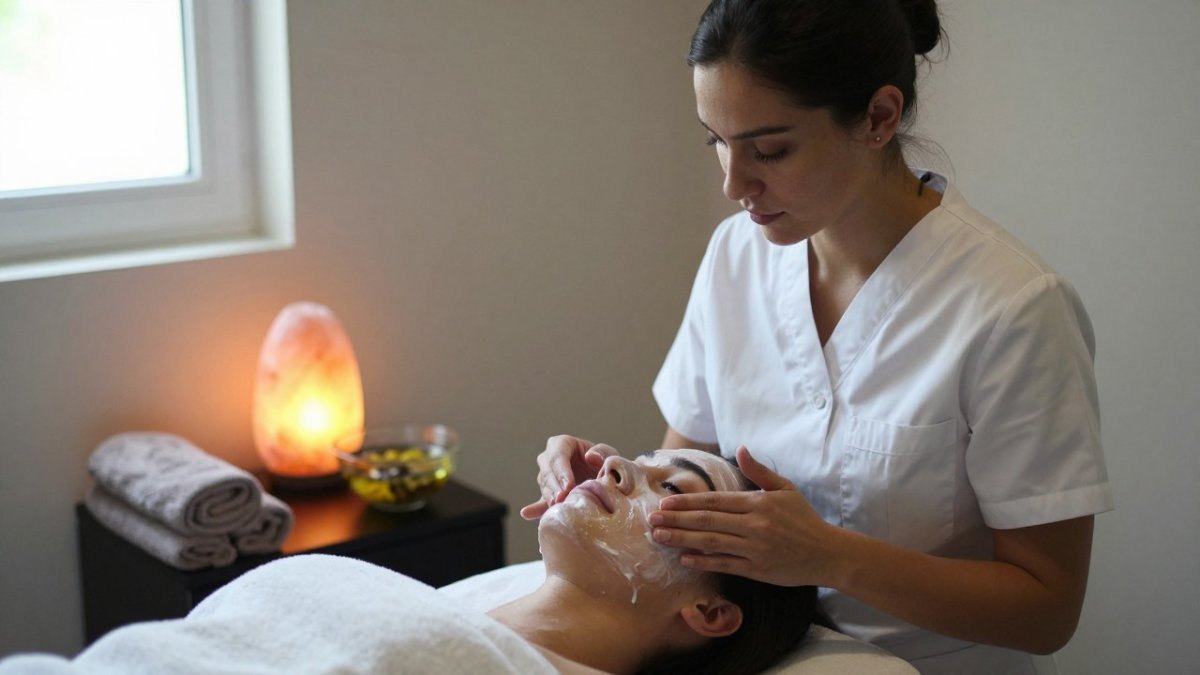
Most facials last 60 to 90 minutes. You will lie down on a treatment table while the esthetician works.

Expect a few things during the appointment:
A consultation about your skin and any medications or allergies
Cleansing and steam, which may feel warm
Gentle extraction if needed, which can feel slightly uncomfortable
A mask that cools the skin
Moisturizer and sunscreen to finish
Some redness or mild sensitivity is common afterward. It usually fades within a day or two.
How Often to Get a Facial and When to Wait
There is no universal schedule. The four-to-six-week interval you hear most often is a rough default, not a rule, and it fits some treatments and skin types far better than others.
A Practical Scheduling Framework
Gentle, hydrating facials: Can be repeated every two to four weeks if your skin tolerates them, though there is no strong evidence that more frequent visits produce better long-term results.
Exfoliating facials with acids: Usually spaced four to six weeks apart so the skin barrier can recover between sessions. Going back too soon on the same area raises the risk of irritation and sensitivity.
Extraction-heavy deep cleansing: Often every four to six weeks for congested skin, tapering to every eight to twelve weeks once congestion is under control.
After a strong peel or laser: Follow the provider's instructions, which commonly mean waiting two to four weeks or longer before another exfoliating treatment.
A useful rule: let your skin response set the pace. If you are still red or sensitive three days after a treatment, the interval or the strength was too aggressive for your skin at that time.
Aftercare and Expected Recovery
Most people have mild redness or tightness for a few hours to a day after a facial. Extractions can leave small marks that fade over a few days. Plan around the following:
Sun protection: Daily broad-spectrum sunscreen is the single most important aftercare step, especially after exfoliation. Freshly exfoliated skin is more vulnerable to sun damage.
Product use: Hold off on retinoids, strong acids, and scrubs for a few days unless your esthetician says otherwise. Stick to gentle cleanser and moisturizer.
Heat and sweat: Skip saunas, hot yoga, and intense workouts for about 24 hours if you had extractions or a stronger exfoliation.
Makeup: Many practitioners suggest waiting several hours to overnight before applying makeup, particularly over extracted areas.
When to call a professional: Seek medical advice if you develop spreading redness, swelling, blistering, or pain that worsens rather than improves. These are uncommon but should not be ignored.
Watch Out Postpone a facial if your skin is sunburned, has an open wound or active rash, or is mid-flare of a condition such as eczema or rosacea. Tell your esthetician about prescription retinoids, blood thinners, and recent cosmetic procedures, each can change what is safe to do.
Cost and What Affects It
Pricing depends on the treatment type, add-ons, and any package options. Contact Rekindle Massage & Skin Spa on its website for current prices or a quote, and ask about the cancellation policy before booking.
Key Takeaway Treat frequency as a plan you revisit, not a subscription. Start with a spacing that matches the treatment's intensity, watch how your skin responds, and adjust with your esthetician's input. If a provider pushes a fixed monthly package before assessing your skin, ask why.
Booking Your First Professional Facial at Rekindle
If you are ready to try a professional facial, Rekindle Massage & Skin Spa offers facial treatments. Contact Rekindle Massage & Skin Spa to schedule an appointment.
Contact the Rekindle team to ask which facial suits your skin and goals. Check current facial specials to see what is on offer before you book.
Frequently Asked Questions
What are the benefits of professional facial treatments?
Professional facials combine deep cleansing, gentle exfoliation, extraction of congestion and targeted hydration in one session. Many people notice smoother texture and a more even, radiant complexion. Results vary with skin type and concerns, and a facial works best as part of a consistent routine. Ask your esthetician which benefits are realistic for your skin before booking.
How often should you get a professional facial?
The right interval depends on your skin type, concerns and treatment type. Some clients come more often during acne treatment, while others space visits further apart for maintenance. Your provider can recommend a schedule based on your skin. If you have a condition such as rosacea or active skin infection, check with a dermatologist first.
Are professional facials better than at-home facials?
At-home masks and cleansers are useful for maintenance between visits. The two work well together: a professional treatment addresses concerns in depth, and a consistent home routine helps maintain the results.
Can a facial help with acne or clogged pores?
For inflamed or persistent acne, a facial can complement medical care but does not replace treatment from a dermatologist. Extractions can cause temporary redness or irritation, so ask your esthetician about aftercare. Avoid facials during active breakouts that are severely inflamed or infected unless a qualified provider approves.

Comments